
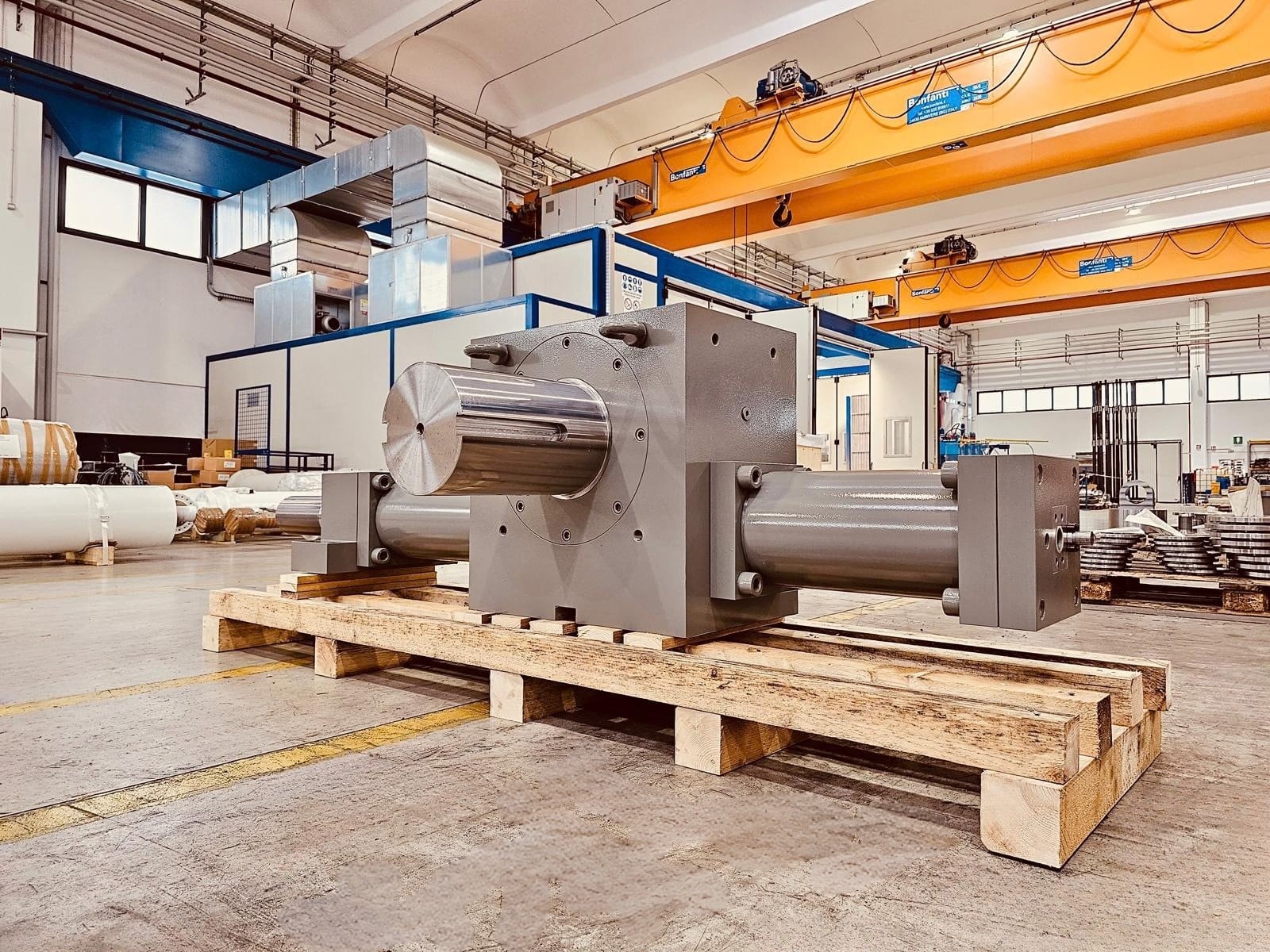
ROTARY ACTUATORS
CUSTOMISED PRODUCTS
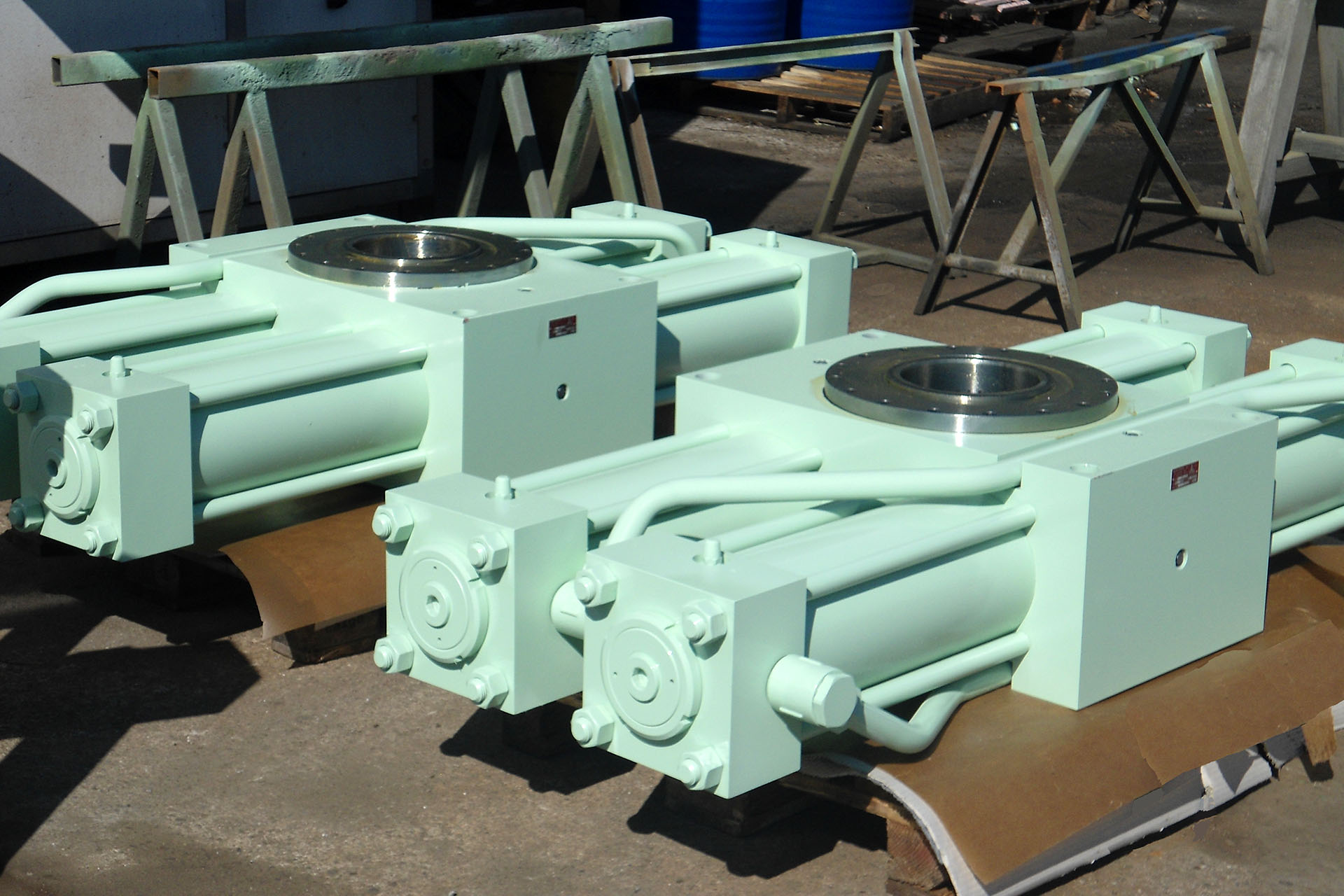
Rotary actuators, also called torque cylinders, convert oil pressure into torque and rotation.
Inside, the pistons drive a toothed rack that turns a pinion connected to the output shaft.
Every actuator is custom designed for the application.
Rotary actuators
They convert oil pressure into torque and rotation: inside, rack and pinion
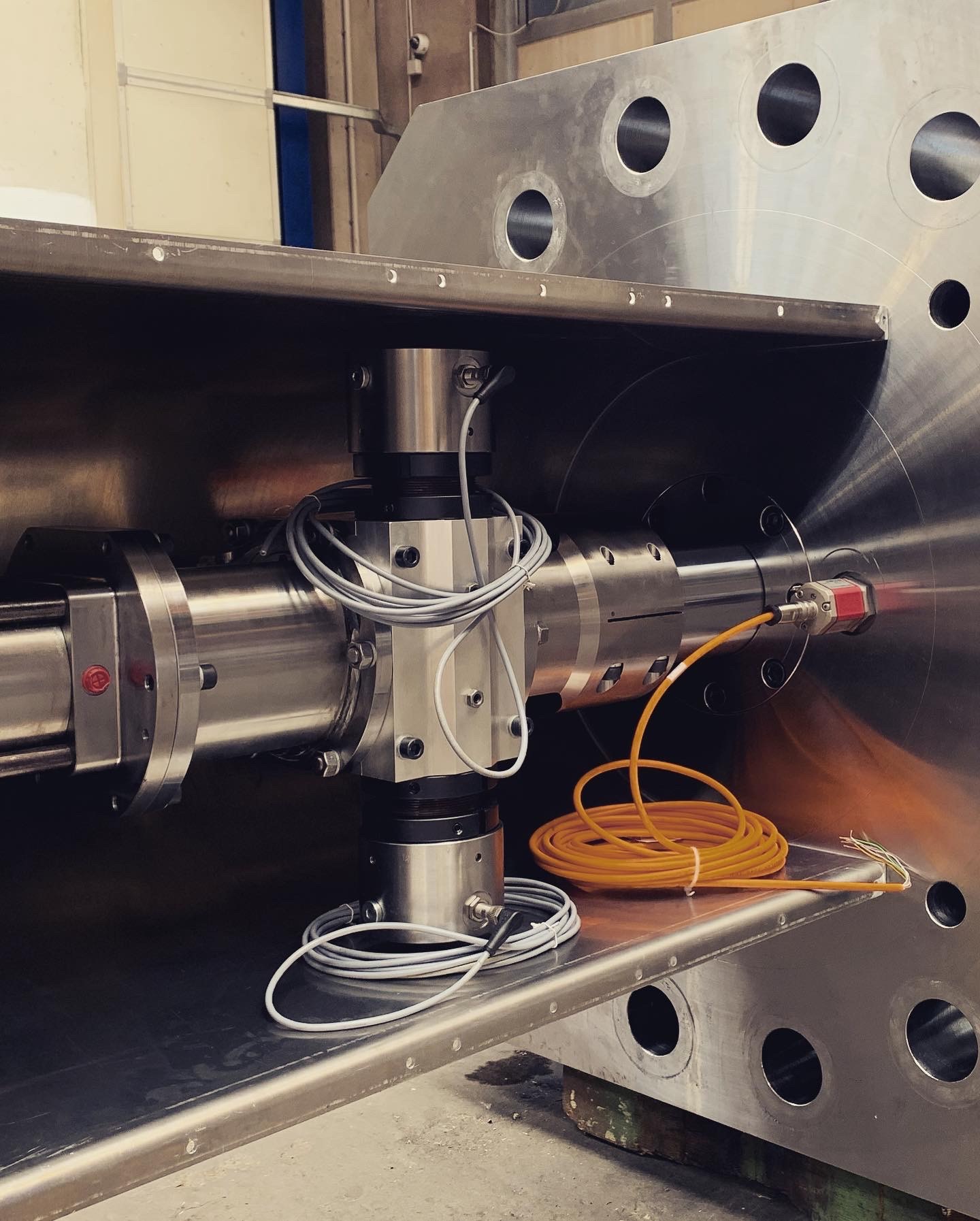
HOW IT WORKS
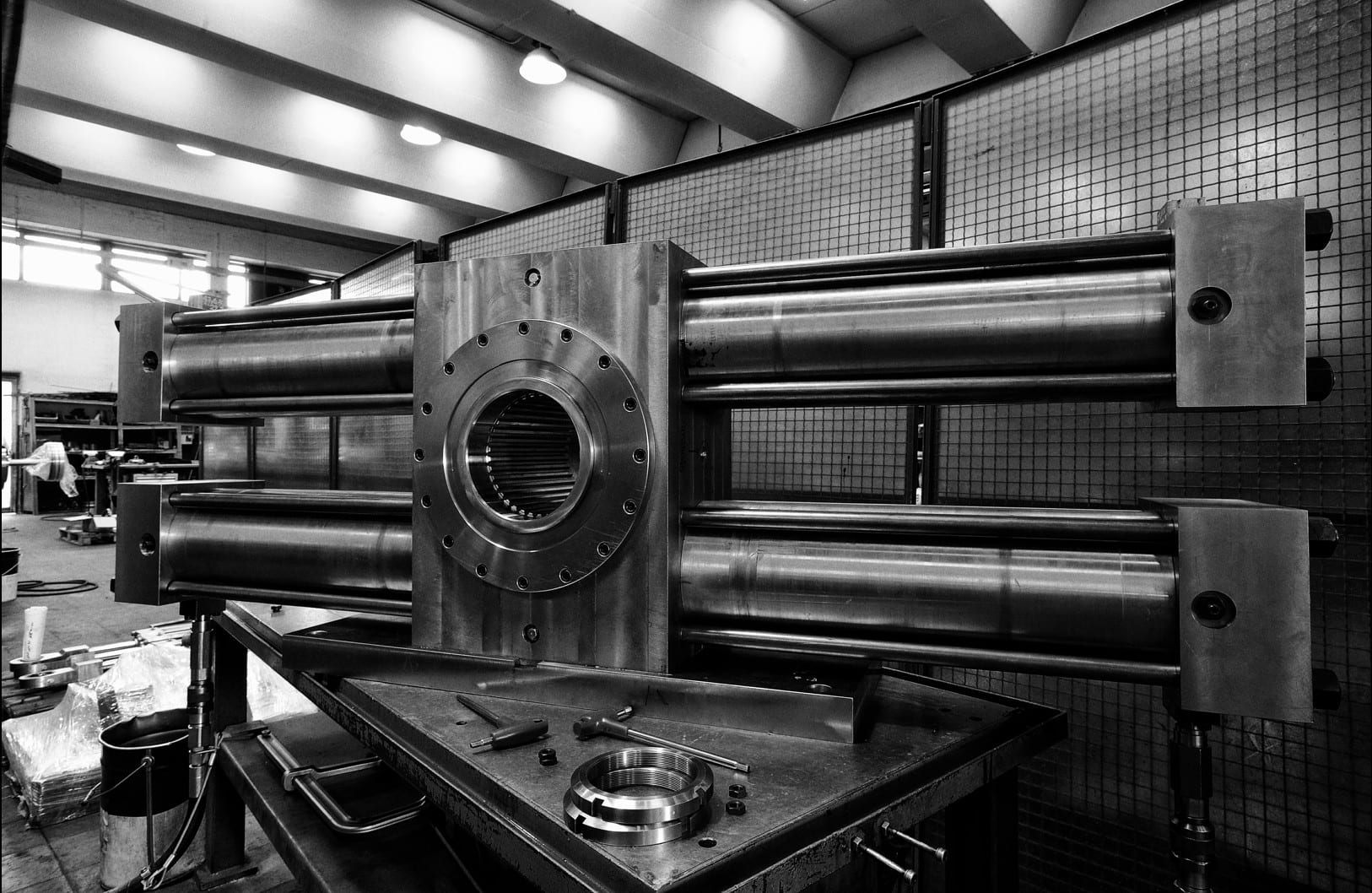
- Pistons and rack: pressurised oil pushes the pistons, connected to a toothed rack.
- Pinion and shaft: the rack turns the pinion and with it the output shaft: the linear motion of the pistons becomes rotation and torque.
- Double rack: in versions with two opposed racks, both act on the same pinion.
Rack and pinion is not the only possible technology: there are vane actuators, where the fluid acts directly on vanes fixed to a rotor, and helical-spline actuators, where a piston with a helical thread converts straight thrust into rotation. The rack-and-pinion system is indicated in particular when high torque over a defined angle is needed.
CONSTRUCTION FEATURES
Torque and speed are defined according to the available pressure and flow. Positioning accuracy depends on the control system used. The rotation angle is established during design according to the movement required by the machine.
Torque, rotation angle, ports and dimensions are defined around the customer's machine; design, machining and testing are carried out in-house.
APPLICATIONS
They are used wherever force must move a heavy load over a narrow angle: earth-moving machines and equipment (for example bucket tilt), automation stations for part positioning and tilting, large ball or butterfly valves in chemical and petrochemical plants, and, in the marine and offshore field, rudders and deck cranes.
To transfer fluids to rotating parts, see our rotary joints and cylinders.
Technical data
| Product | Rotary actuators (torque cylinders) |
|---|---|
| Principle | Rack and pinion |
| Function | Convert oil pressure into torque and rotation |
| Design | Custom made for the application |
| Motion | Rotation angle defined during design |
Frequently asked questions
What is a rotary actuator?+
A hydraulic actuator that converts oil pressure into torque and rotation of a shaft.
How does a rack-and-pinion actuator work?+
The pistons move a toothed rack that turns the pinion connected to the output shaft.
Are rotary actuators standard products?+
No. Every actuator is custom designed for the application.
Why choose a rack-and-pinion rotary actuator?+
The rack transfers piston force to the pinion and output shaft, converting it into torque. It provides a compact solution for a defined angular movement; torque, angle and control are selected for the application.
Need a cylinder built around your application?
Tell us your requirements and our technical office will prepare a quote.