
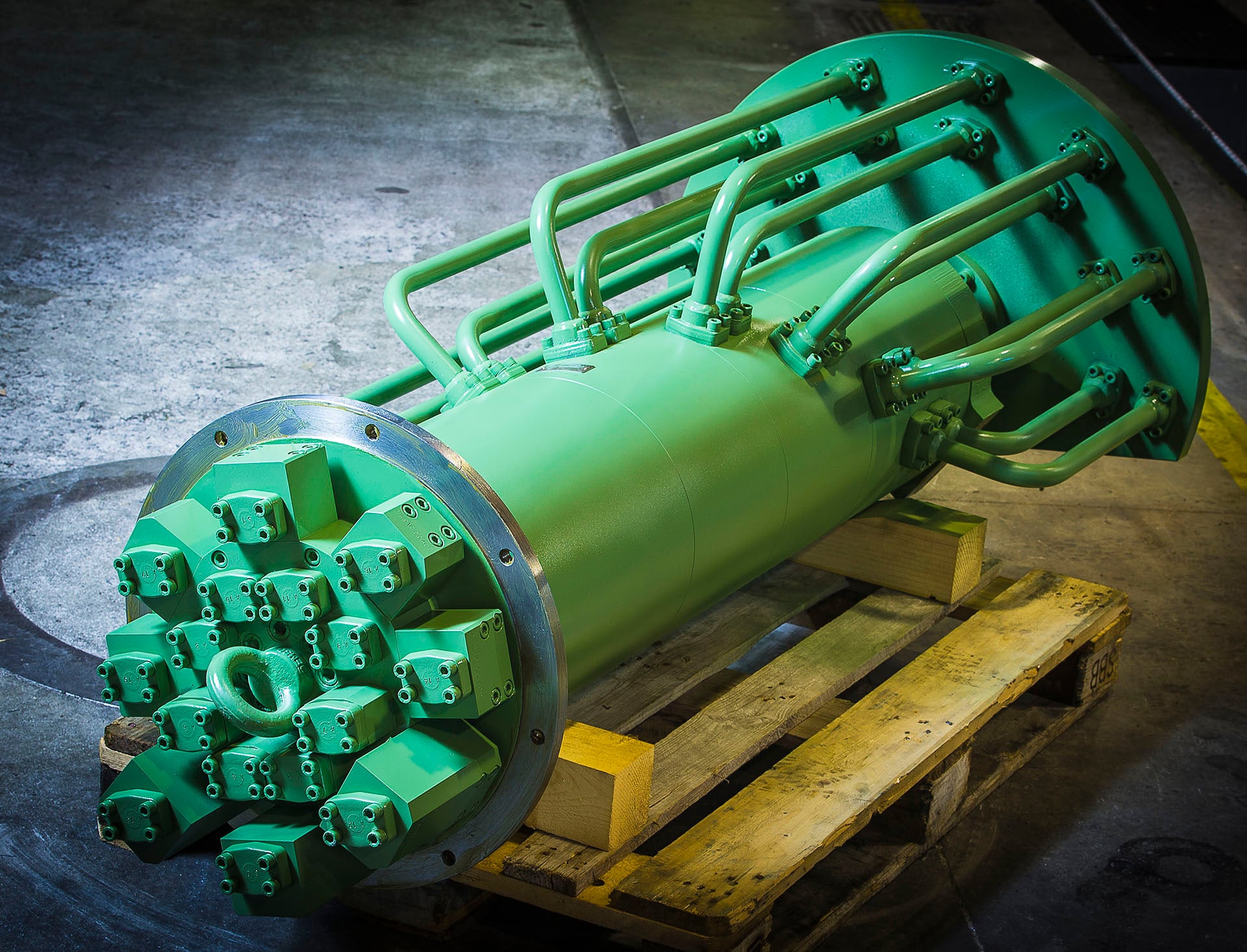
ROTARY JOINTS AND ROTARY CYLINDERS
Custom rotary joints and rotary cylinders
Rotary joints transfer fluids between the fixed part of a machine and a rotating shaft, or vice versa. Silvio Fossa S.p.A. manufactures joints for oil, water, grease, emulsion and air, with passages and seals selected for the application.
Rotating hydraulic cylinders receive oil through a rotary joint and produce axial rod movement while the assembly rotates with the machine shaft. In coilers and uncoilers, this movement expands and collapses the mandrel segments to grip and release the coil.
Rotary joints and rotary cylinders are custom designed for the required function and operating conditions.
Rotary joints and rotary cylinders
Grease joint and oil joint, two feeds each, mounted on the cylinder
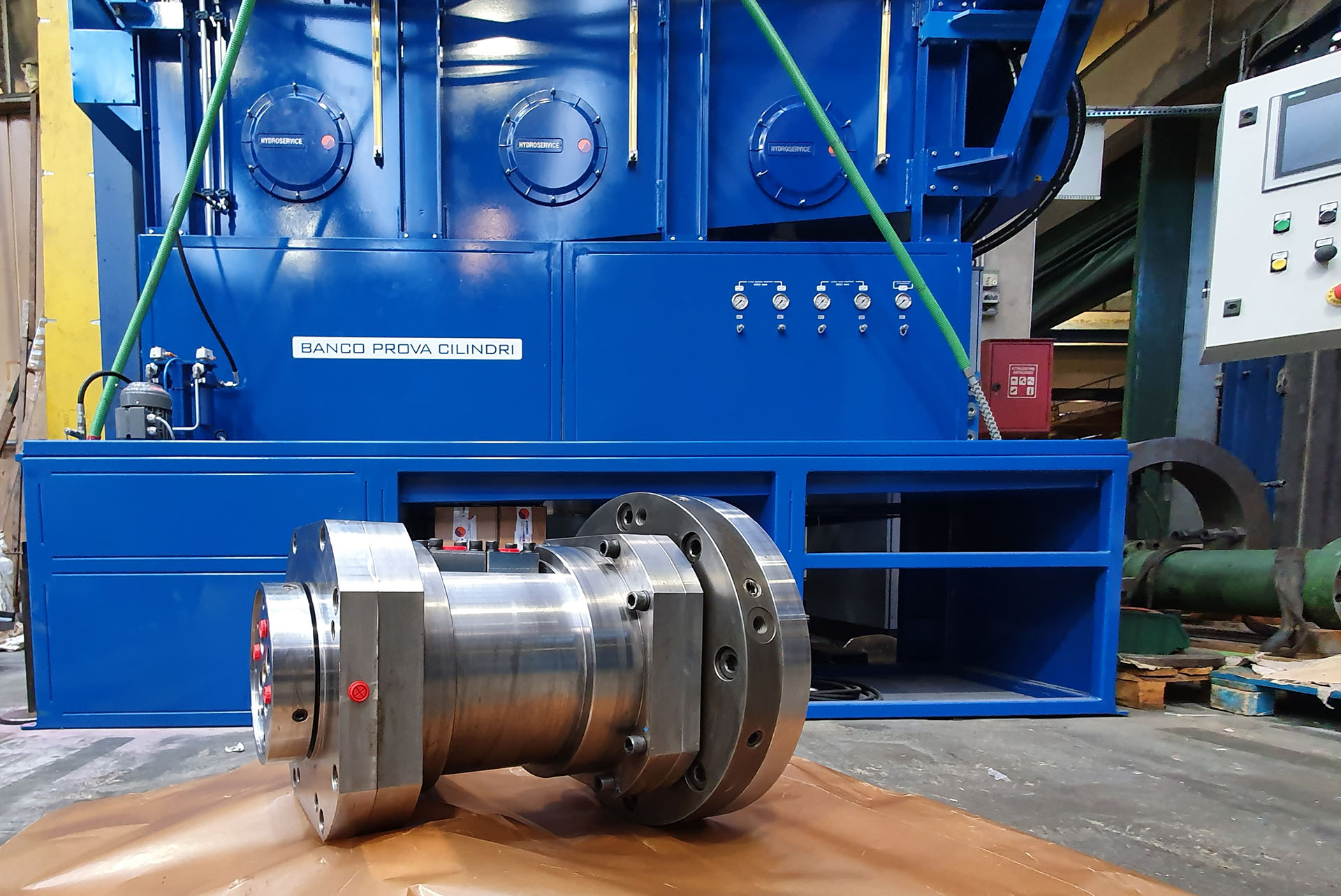
HOW IT WORKS
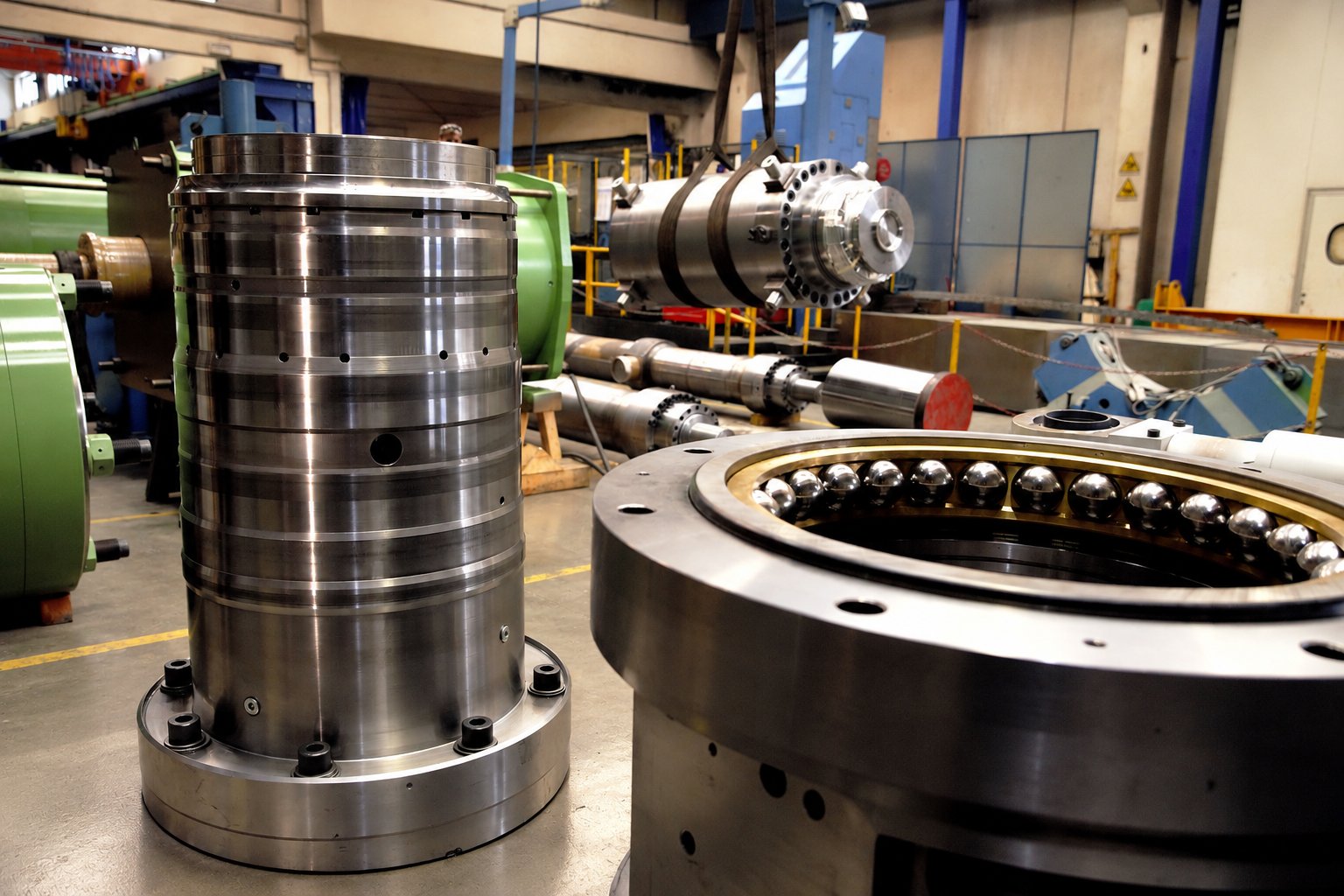
- Rotary joints: a fixed part, connected to the piping, and a rotating part, fixed to the shaft, are separated by rotary seals. The fluid passes from one to the other while the shaft turns, even through several independent passages.
- Rotary joint and cylinder: the joint stays still while the shaft turns, carrying the fluid to the rotating cylinder; the cylinder rod strokes back and forth.
CONSTRUCTION FEATURES
Seals and materials are chosen according to the fluid, pressure, rotational speed and temperature.
We can make joints for oil, water, grease, emulsion and air. The number of passages, ports and dimensions are defined around the customer's machine; design, machining and testing are carried out in-house.
ADVANTAGES
- Continuous supply to equipment mounted on rotating parts
- Several fluids or circuits in a single joint
- Custom solutions for every application
- Revamping of existing joints available
APPLICATIONS
Rolling mills and steel plants, and in general machines with rotating shafts that need hydraulic oil, cooling water, grease or air. See our cylinders for metallurgy. To convert oil pressure into torque and rotation, see our rotary actuators.
ROTATING CYLINDER FOR COILER AND UNCOILER
In metal strip processing lines and in hot or cold rolling mills, a rotating hydraulic cylinder is mounted on the coiler or uncoiler mandrel axis: a mechanical assembly that turns with the mandrel.- Function: the cylinder rotates with the main shaft (mandrel) and hydraulically drives the expansion and collapse of the mandrel segments.
- Purpose: to grip the inside of the steel coil firmly during high-tension winding and release it quickly once the operation is complete.
- Demands: Pressure, rotational speed and torsional loads are defined by the machine duty cycle and checked when sizing the assembly.
Cylinders we have built
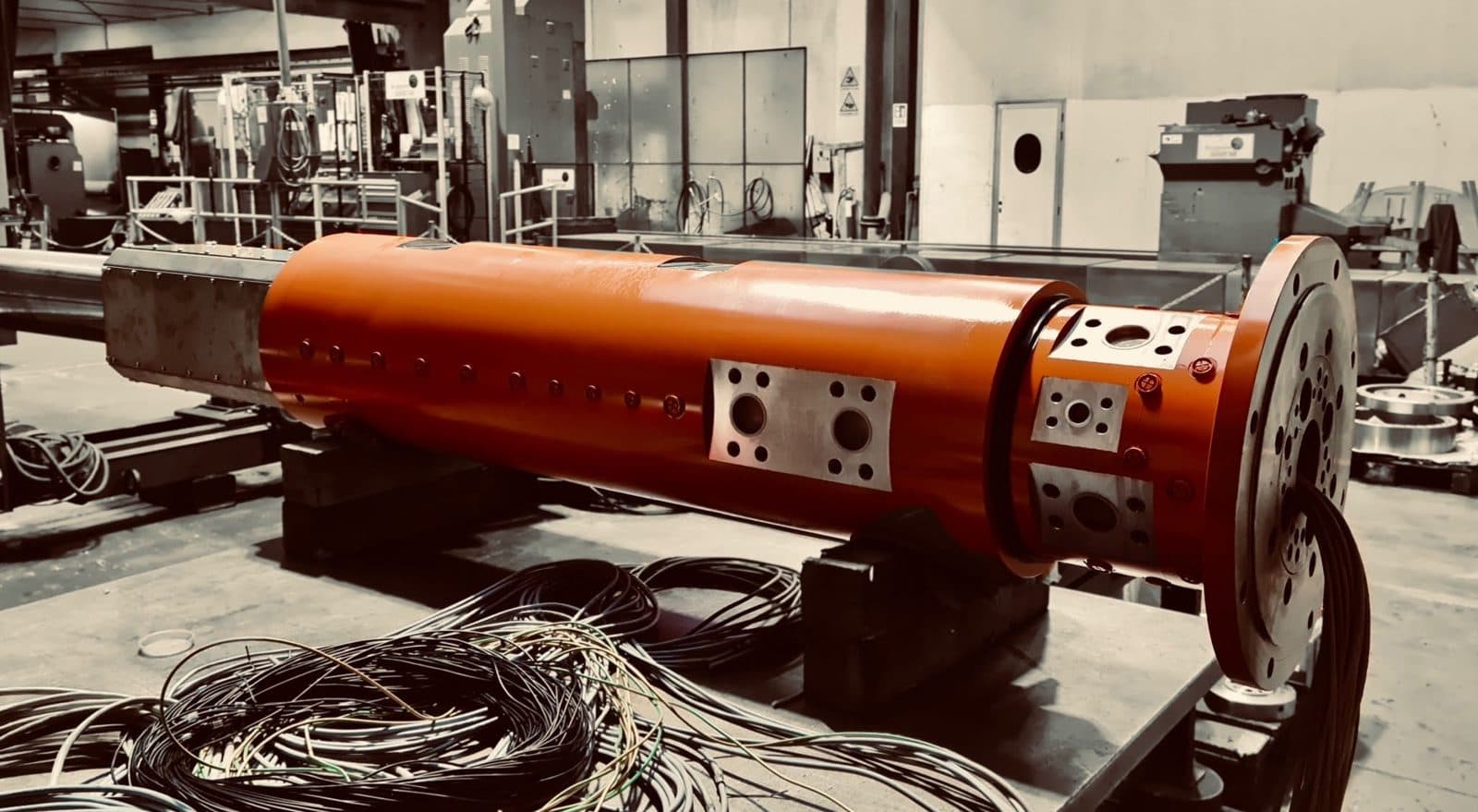
Continuous casting
Rotary distributors
- Bore
- Ø 260 mm
- Hydraulic ways
- 24
- Electrical contacts
- 88
- Max. pressure
- 350 bar
- Max. current
- 30 A
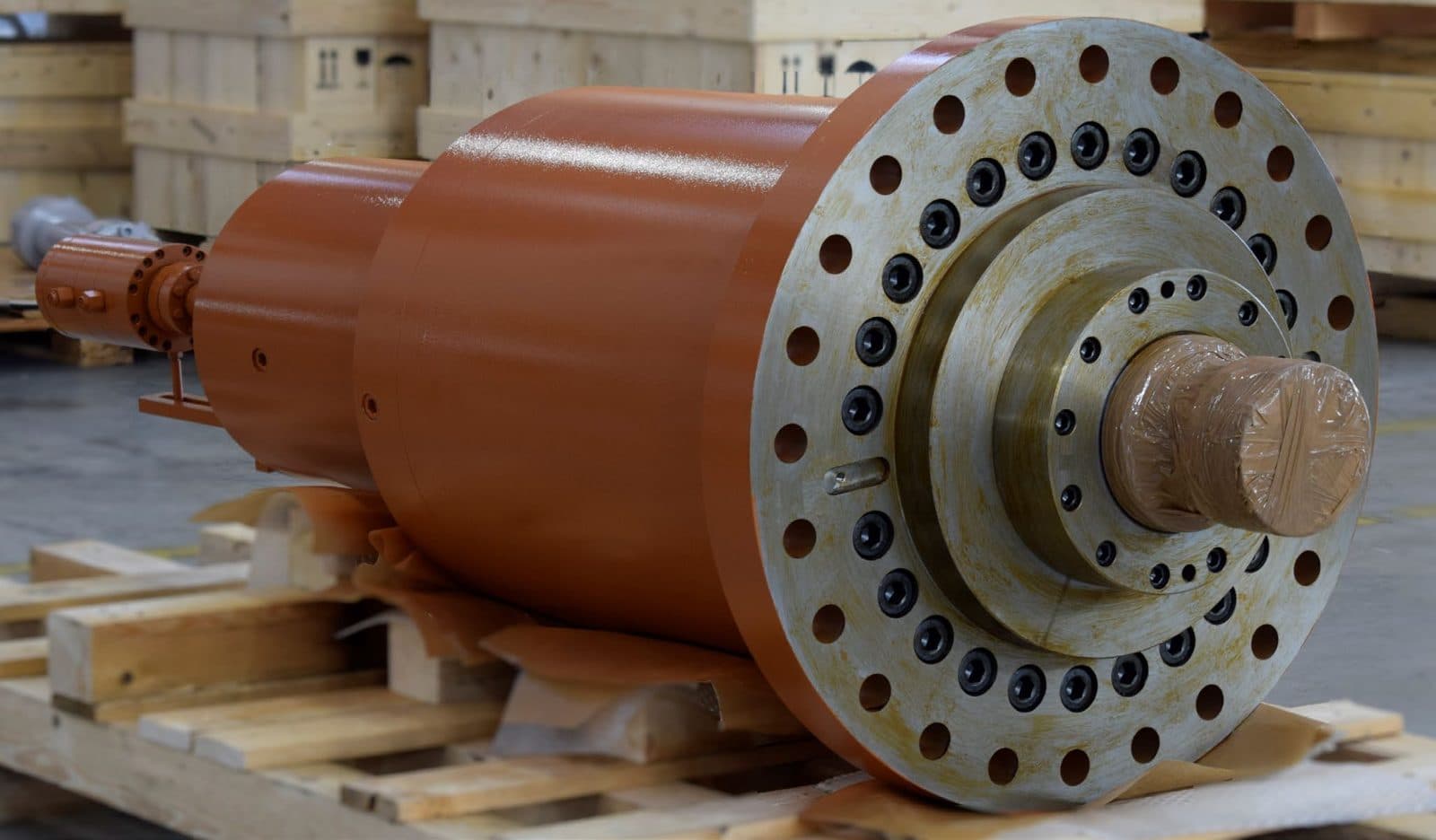
Rotary joints and rotary cylinders
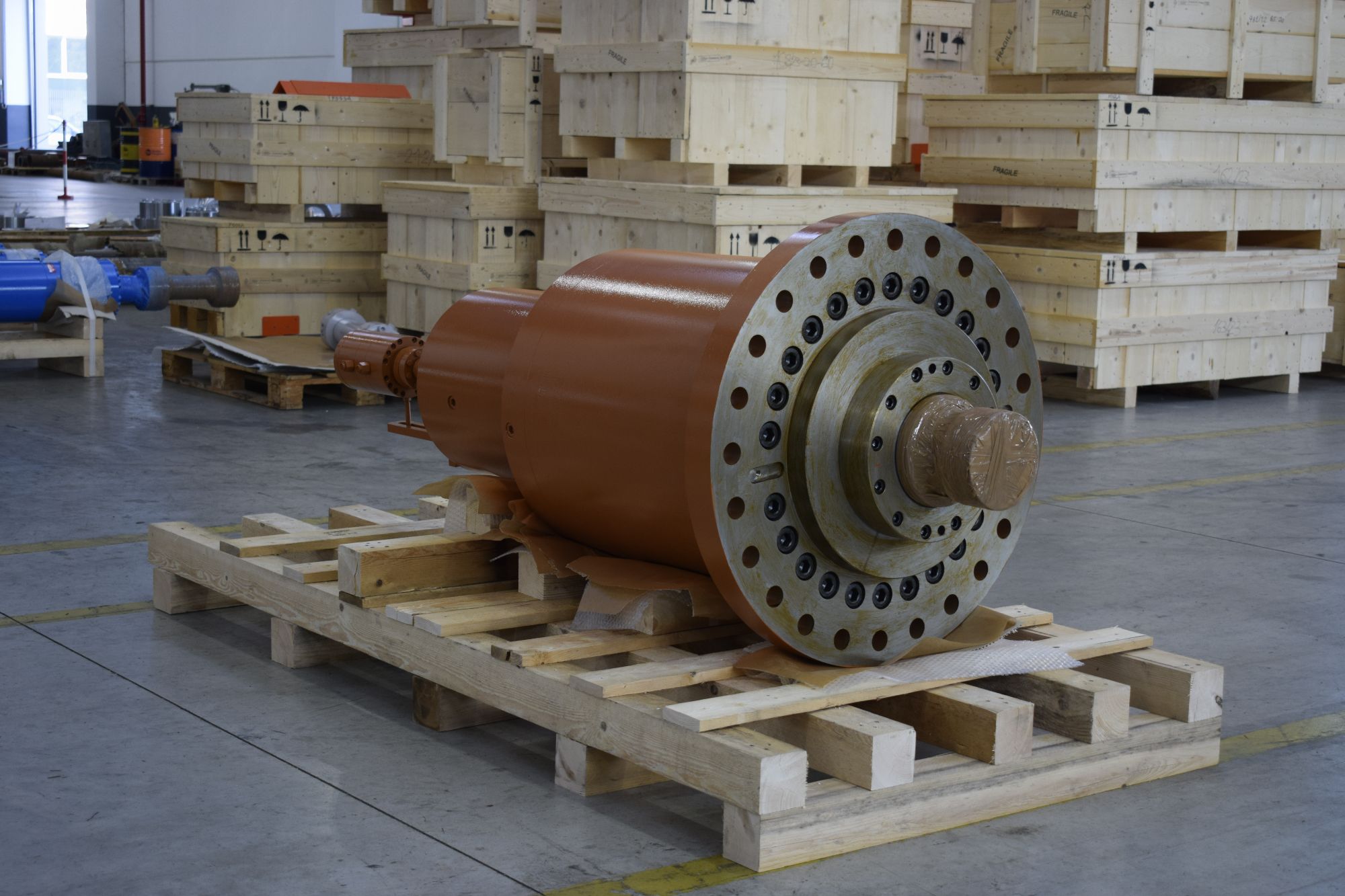
Rotating cylinder with oil and grease joint
- Dimensions
- 400/195×100 mm
- Pulling force
- 950 kN
- Oil/grease ways
- 2/2
- Rpm
- 600
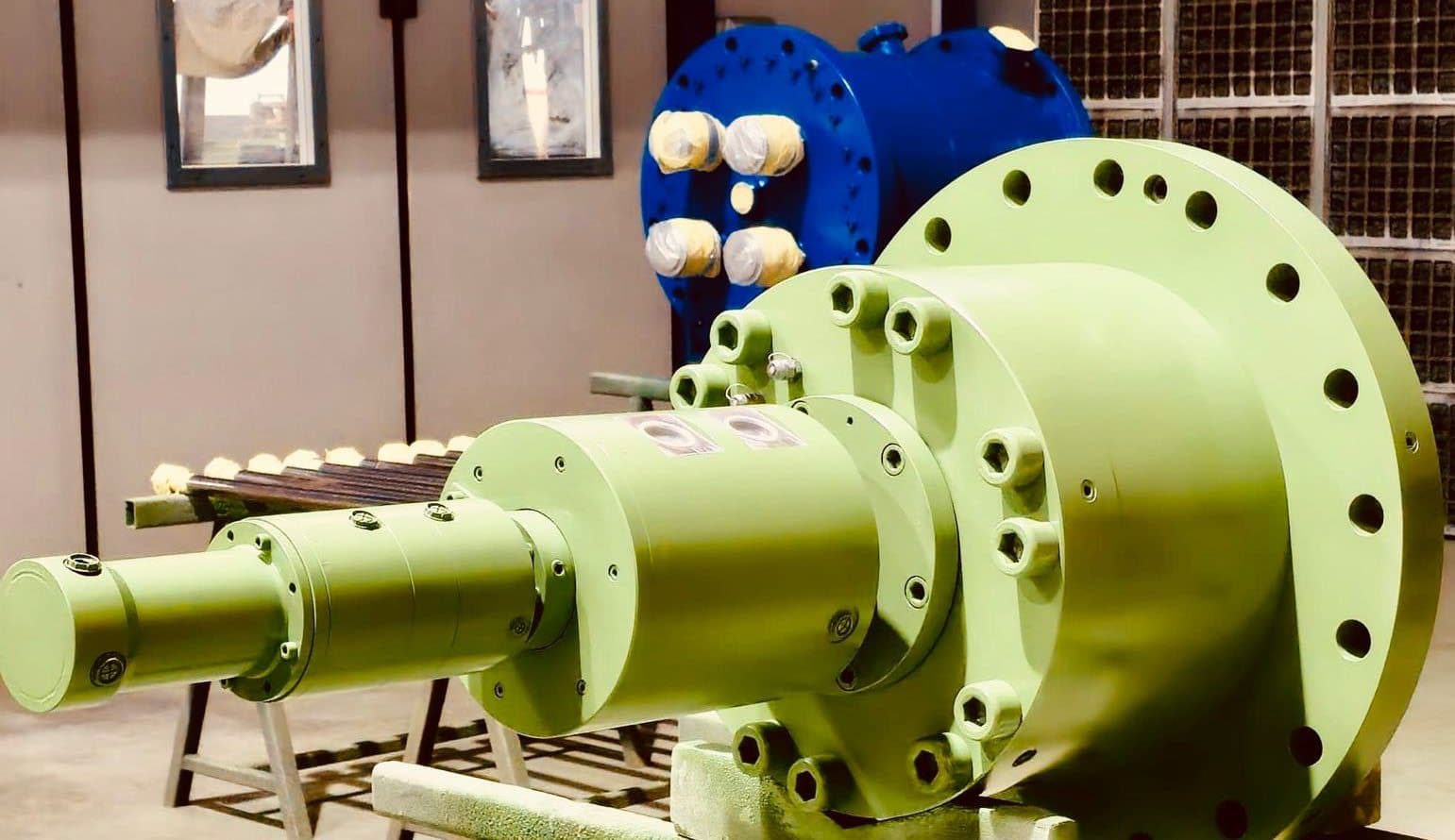
Rotary joints and rotary cylinders
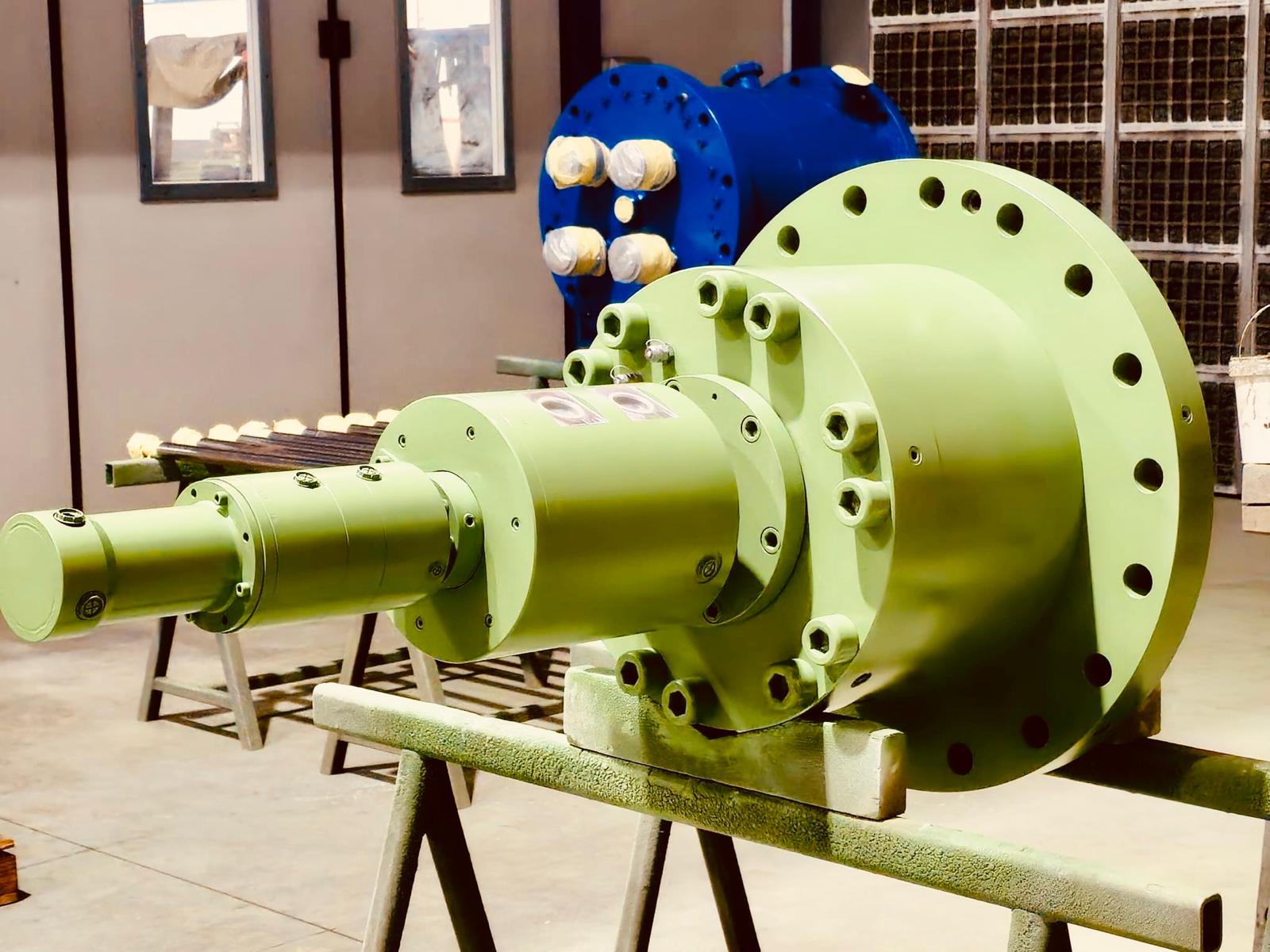
Rotating cylinder with oil and grease joint
- Dimensions
- 390/180×90 mm
- Pulling force
- 1,500 kN
- Oil/grease ways
- 2/2
- Rpm
- 600
Technical data
| Products | Rotary joints and rotary cylinders |
|---|---|
| Fluids | Oil, water, grease, emulsion, air |
| Function | Joints: fluid transfer between fixed and rotating parts. Cylinders: axial rod movement while the assembly rotates. |
| Design | Custom made for the application |
| Applications | Coiler and uncoiler mandrels in metal strip lines |
Frequently asked questions
What is a rotary joint for?+
It transfers a fluid from the fixed part of a machine to a rotating shaft, or vice versa, while the shaft is turning.
Which fluids can a Fossa rotary joint handle?+
Oil, water, grease, emulsion and air. Seals and materials are chosen according to the fluid and the operating conditions.
Are rotary joints standard products?+
No. Depending on the application, the design calls for different solutions: every joint is custom designed.
How does the rotating cylinder of a coiler work?+
Mounted on the mandrel axis, the cylinder rotates with it and receives oil through the rotary joint. It drives mandrel-segment expansion and collapse to grip and release the coil. Permissible pressure and speed depend on the design and operating conditions.
Need a cylinder built around your application?
Tell us your requirements and our technical office will prepare a quote.