

HYDRAULIC CYLINDERS FOR PRESSES
Sector
Silvio Fossa S.p.A. designs and manufactures custom hydraulic cylinders for presses. The configuration is defined by the function on the machine: main cylinder, return, ejection or auxiliary movements.
In a hydraulic press the cylinder is the heart of the machine: it develops the working force, controls the stroke and runs for millions of cycles.
TYPICAL APPLICATIONS
- Main cylinders of presses for stamping, forging, extrusion, forming and blanking
- Return and fast approach cylinders for the slide
- Ejector cylinders and die cushions
- Die clamping and die change cylinders
SECTOR REQUIREMENTS
- Very high forces: large bores and structures sized with FEM analysis
- Repeated cycles: fatigue design of barrel, rod and connections
- Long-term sealing: seal systems chosen for pressure, speed and fluid
- Cycle times: fast filling of the main cylinder with prefill valves
RECOMMENDED PRODUCTS
- Single acting and plunger cylinders: the classic solution for the main cylinder
- Double acting cylinders: for return, ejectors and motions controlled in both directions
- Prefill valves: to fill the main cylinder quickly
- Piston accumulators: to store energy and cover flow peaks
- Revamping: to rebuild the cylinders of existing presses
The examples include main cylinders for open-die and closed-die presses and cylinders for extrusion. Photographs and data refer to the individual applications shown; they do not define one configuration for every press.
Cylinders built for presses
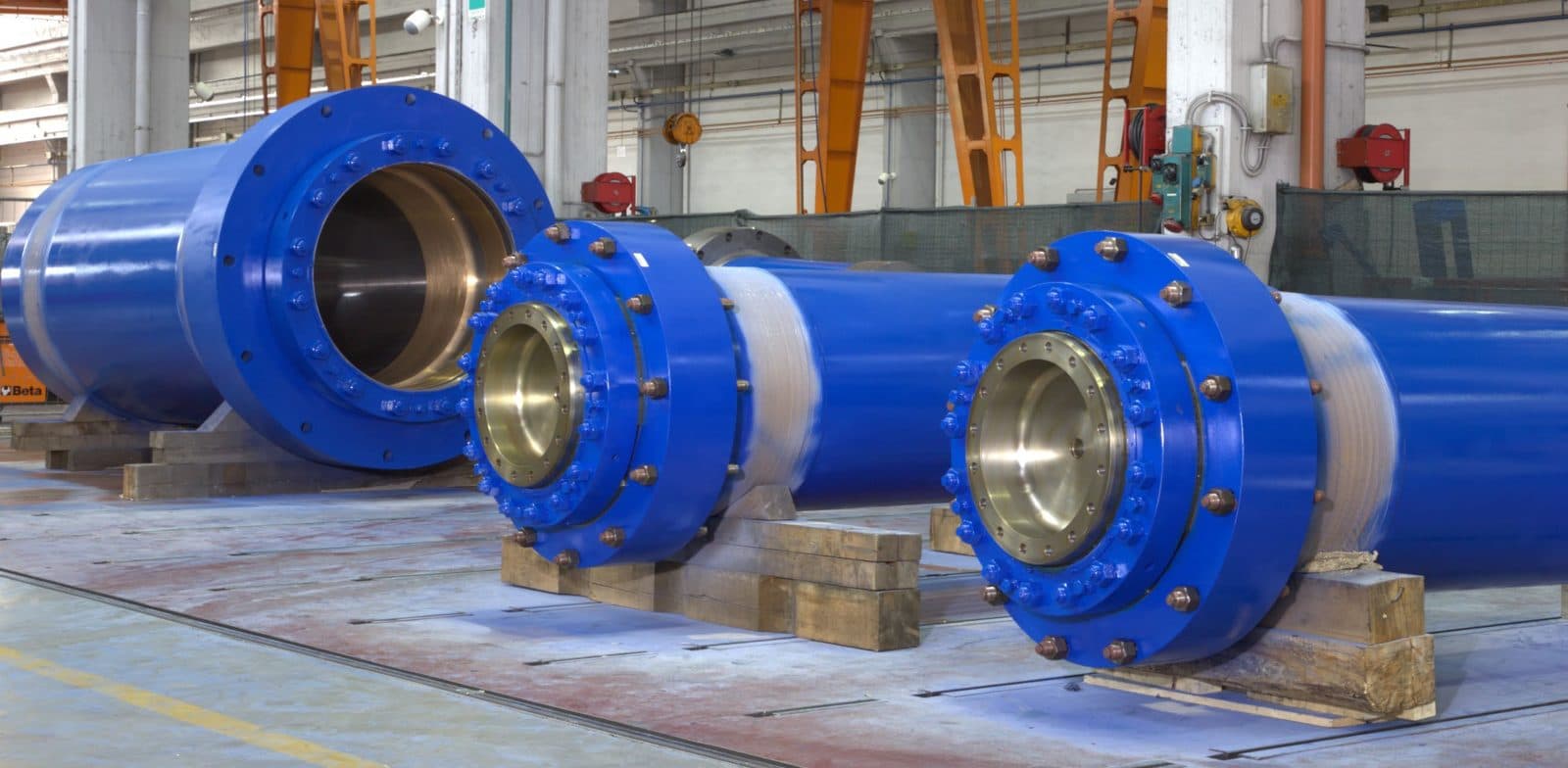
Open-die press main cylinders
- Bore
- Ø 1.300 mm
- Rod
- Ø 1.300 mm
- Stroke
- 2.300 mm
- Push force
- 53.600 kN
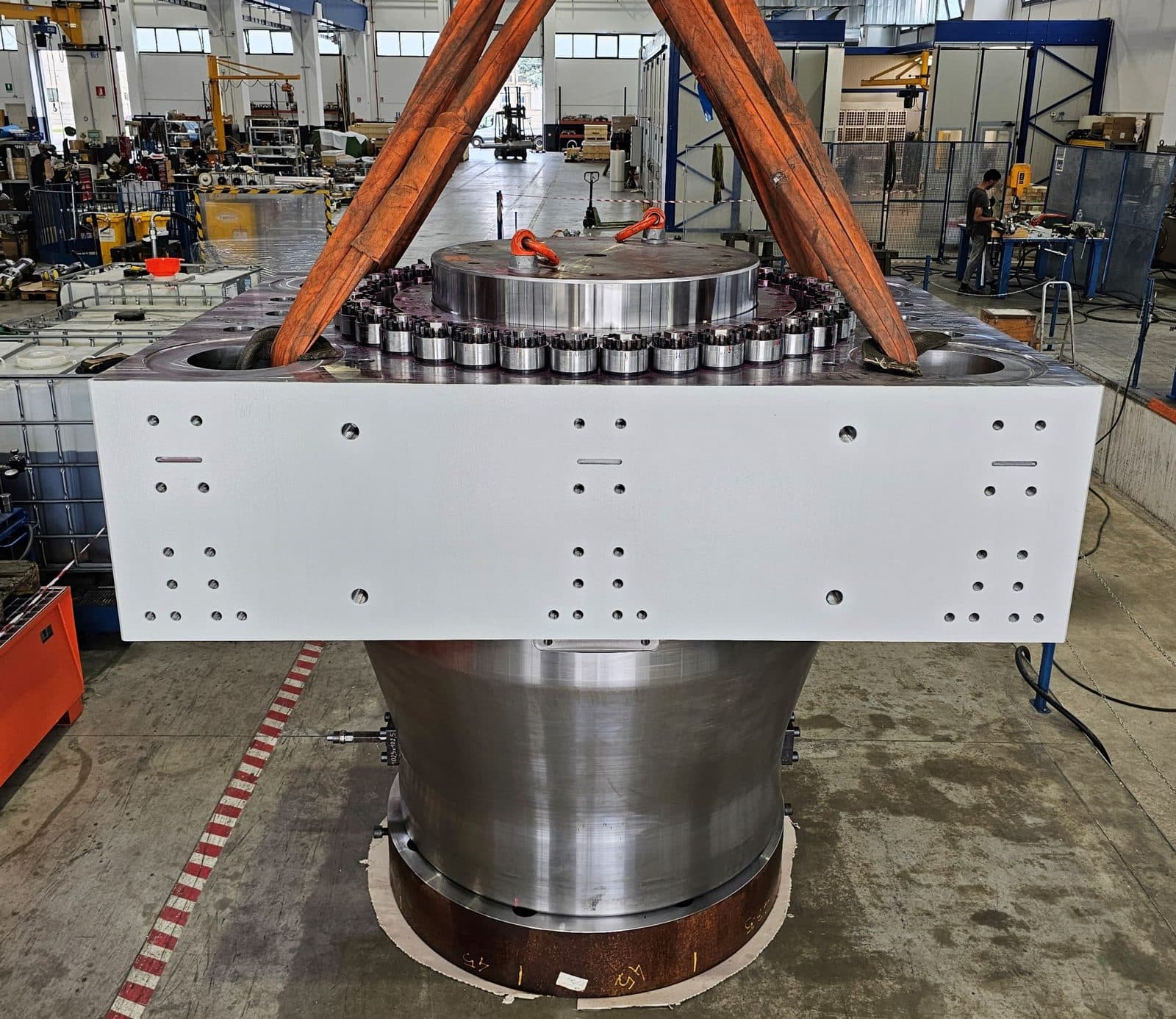
Closed-die press main cylinders
- Bore
- Ø 1.050 mm
- Rod
- Ø 1.050 mm
- Stroke
- 780 mm
- Push force
- 28.500 kN
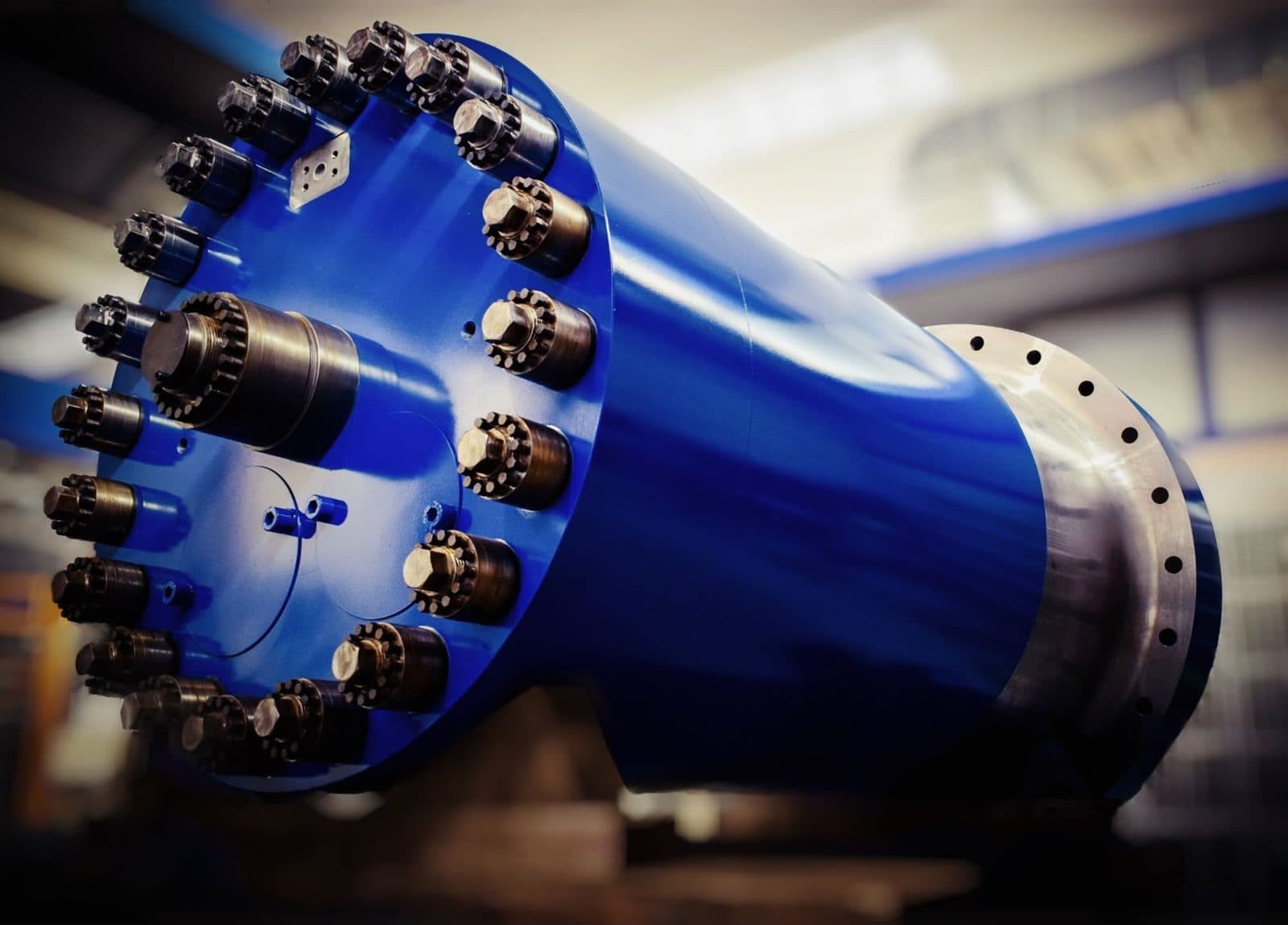
Press main cylinders
- Bore
- Ø 1.100 mm
- Rod
- Ø 1.100 mm
- Stroke
- 1.325 mm
- Push force
- 29.900 kN
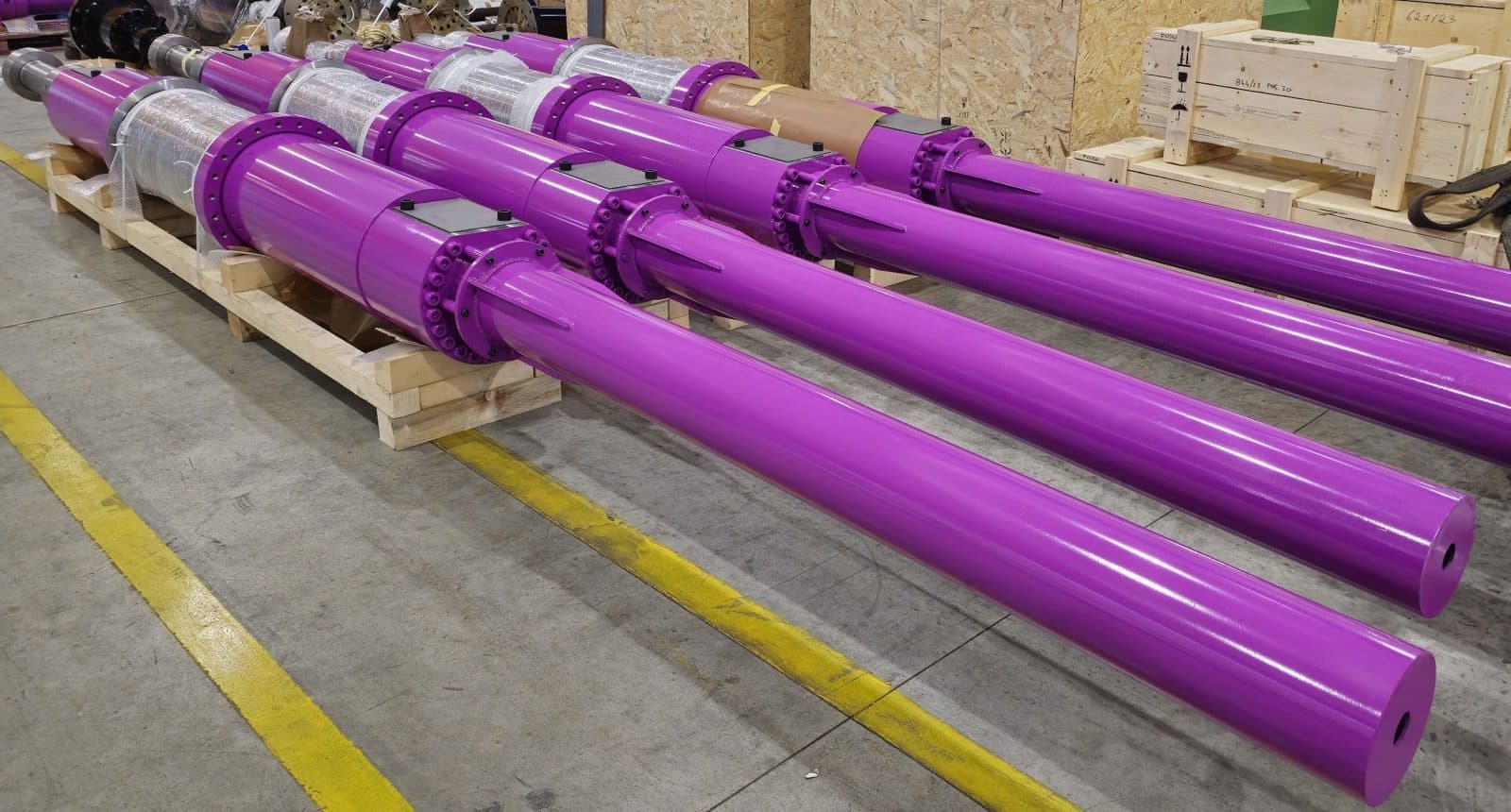
Extrusion press cylinders
- Bore
- Ø 280 mm
- Rod
- Ø 140 mm
- Stroke
- 1.835 mm
- Push force
- 1.940 kN
Capabilities
| Max bore | Up to 2.500 mm |
|---|---|
| Max length | Up to 15.000 mm |
| Max assembled weight | Up to 100 tons |
| Tests | Static and dynamic, up to 1.500 bar |
| Engineering | In-house: solid design, parametric configuration, FEM and fatigue analysis |
| Certifications | ISO 9001, ISO 14001, ISO 45001 |
| Production | Two large areas in Northern Italy |
From press specification to cylinder configuration
The main cylinder, return cylinders and ejectors perform different tasks. Defining the configuration requires force, stroke, installation space and duty cycle, together with the fluid and operating conditions. Mountings, seals and cushioning are selected in relation to the machine.
For an existing press, include available drawings and describe the reason for the work: cylinder replacement, maintenance or overhaul. Revamping allows the restoration of the component to be assessed; spare parts and assistance support maintenance.
Frequently asked questions
Does Silvio Fossa S.p.A. make cylinders for presses?+
Yes. Silvio Fossa S.p.A. manufactures custom cylinders for presses, including main cylinders for open-die, closed-die and extrusion presses. Force, stroke and installation dimensions are defined for each project.
Which cylinders are used in a hydraulic press?+
The main cylinder is usually single acting or a plunger, often with a prefill valve; return, ejectors and auxiliary motions use double acting cylinders.
What is the maximum size?+
Components up to 3.000 mm diameter and 15.000 mm length can be machined, and cylinders and components weighing up to 100 tons can be assembled.
How are the cylinders tested before delivery?+
Static and dynamic tests are performed up to 1.500 bar, simulating the final application. Materials undergo certified controls, including level 2 non-destructive tests carried out in-house.
Can an existing cylinder be replaced or revamped?+
Yes. Silvio Fossa S.p.A. offers a complete revamping service for all kinds of cylinders, both its own and those of other manufacturers.
What information is needed for a press cylinder enquiry?+
State the cylinder function, required force and stroke, pressure, available space, fluid and duty cycle. For a replacement, add the identification number, drawings or photographs of the existing cylinder.
Need a cylinder built around your application?
Tell us your requirements and our technical office will prepare a quote.